Research
Supporting Health Worker Wellbeing through Evidence-backed Pathways
Caring for those who care for us starts with real solutions. Healthcare workers face immense pressure, and their resilience and well-being deserve more than quick fixes.
By relying on evidence-based approaches, we can create support systems that truly work, helping professionals feel valued, stay healthy, and continue delivering the best care for their patients.

Areas of Research
Evidence Synthesis
Our evidence synthesis stream is dedicated to systematically examining the challenges of resilience, burnout, and compassion fatigue among healthcare workers in low- and middle-income countries (LMICs). The reviews bring together diverse findings from across the global health landscape, consolidating insights into the mental health and well-being of frontline professionals.
By rigorously analyzing existing research, we aim to identify what truly works, highlighting interventions, policies, and support systems that are grounded in evidence. We aim to not only strengthen the knowledge base on health workforce well-being but also provide actionable guidance for governments, institutions, and organizations striving to build sustainable, supportive environments for healthcare workers worldwide.

This review aims to examine commonly used definitions of resilience in the healthcare domain, to analyse these definitions through the socio-ecological framework and to identify the different dimensions of resilience relevant to healthcare workers.
Read more…
This narrative review highlights the significant impact of compassion fatigue on frontline healthcare workers in low- and middle-income countries. It emphasizes the need for comprehensive strategies to enhance individual resilience and organizational support to create a more sustainable and compassionate healthcare environment.
Read more…
This systematic map provides a structured overview of global evidence on resilience‑building interventions for healthcare workers, cataloguing intervention types, contexts, and outcomes through an interactive visual interface that highlights patterns and research gaps.
Read more…
This study aims to systematically map global evidence on resilience‑building interventions for healthcare workers to identify areas of strength and gaps in research. The map will provide a comprehensive overview of intervention types, contexts, and outcomes, guiding future systematic reviews where evidence is available. By highlighting effective strategies and unmet needs, it aims to support efforts to enhance healthcare worker well‑being, job satisfaction, and performance, ultimately contributing to improved patient care, and a more resilient workforce.
Read more…
The project aims to explore the lived experience of all cadres up to primary healthcare level during and after disaster in Balasore district of Odisha, India. This study will help understand the coping strategies adopted to manage stress, and the support needs of the HCWs during and after disaster.
Read more…
Implementation Research
Our implementation research efforts focus on understanding how digital apps designed to support Health worker mental health, wellbeing and efficiency are adopted, adapted, and sustained in diverse healthcare settings, particularly in low‑ and middle‑income countries.
These efforts contribute to a broader agenda of identifying evidence‑based, scalable strategies that enhance healthcare worker well‑being, reduce burnout, and support sustainable workforce performance. By systematically examining adoption, usability, and impact, we aim to generate actionable insights that inform future digital health solutions for the global health workforce.

The study aims to assess feasibility of deploying the WellMe App and its preliminary impact among FLWs from public health system in Gorakhpur, Uttar Pradesh, India
????
Outputs and Publications
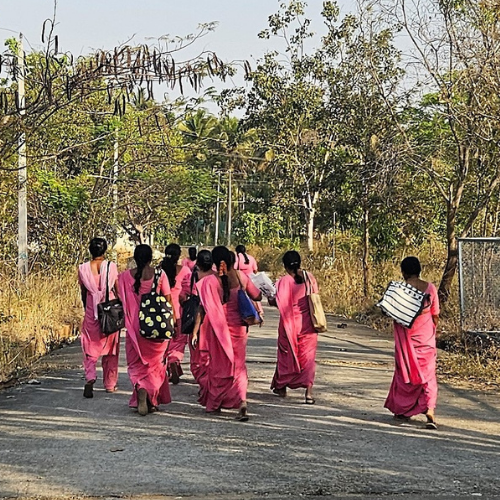
Co-creating a Resilience Toolkit with Frontline Health Workers: Reflections from Participatory Workshops
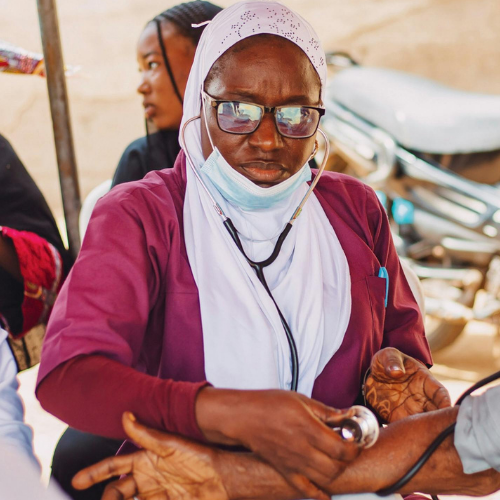
Defining resilience for global healthcare workforce: A narrative review

Factors associated with compassion fatigue: a narrative review
Collaborate
The TRC team, together with members and partner representatives is working to keep up to date on global developments and opportunities relevant to the TRC mission.
As TRC community members, we invite you to join us in shaping these research efforts. Contributions can be in the form of innovative ideas, participation in research, collaborating for academic writing, and providing review support.
Would you like to hear more on opportunities to collaborate?
Write to us at trc.community@georgeinstitute.org