
Published
Sep 22, 2026
share and Print
Not the Only Way Out! (2) – From Burnout to Balance
This is Post 2 of a 3-part Blog Series on Suicide and Prevention among Healthcare Workers titled "Not the Only Way Out!"
Content Warning: This article discusses suicide, mental health challenges, burnout, and emotional distress among healthcare workers. Some readers may find these topics difficult or triggering. Please read with care and take breaks if needed. Help is available, please find the helplines mentioned at the end of this blog - https://trc.community/blog/not-the-only-way-out-1-suicide-the-hidden-crisis/
A side of medical internships that we do not talk about enough:
the very human desire to belong. I wanted to belong...
... can be both inspiring and terrifying!
By Angellene Firmalino, Medical Graduate and Public Health Professional, Sydney, Australia
I could start this piece with statistics about burnout—how common it is among healthcare workers, how many people report feeling emotionally exhausted, or how the pandemic intensified pressures on an already stretched health workforce—but somehow, that feels too distant for something so deeply personal.
Because perhaps you already know the feeling: the kind of exhaustion that sleep does not seem to fix, the sense of giving so much of yourself that you begin to wonder how much of you is actually left, or the pressure to keep going because people depend on you, because there is work to be done, and because stopping, even for a moment, can somehow feel like failure.
Yes, burnout can be measured in numbers, but it is lived in moments, and for me, that experience became very real at the height of the COVID-19 pandemic.
The Faces Behind the Numbers
Looking back, I was a medical intern at Veterans Memorial Medical Center in Quezon City, more than 700 kilometers from my hometown of Bacolod City. I had been excited to finally enter the hospital environment I had spent years preparing for, it was also one of the most frightening periods of my life. While much of the world watched case numbers and mortality figures rise on television screens and social media feeds, those of us working at the ground level of healthcare experienced those numbers very differently, because they were never simply numbers to us.
They had names. They were our patients, our colleagues, our friends, and our families, and sometimes they were people we had spoken to only hours earlier.
Hospitals felt less like the controlled environments we had imagined during training and more like places where everyone was learning how to respond to something none of us completely understood. Fear and uncertainty became part of everyday hospital life, and many of us were simply trying to do our best with what we knew and what we had.
I still remember one of my first resuscitation experiences during the pandemic. We rushed to the patient wearing the protective equipment available to us at the time—gloves, an N95 mask, and a hospital gown—only to learn later that the patient was COVID-positive. I remember the shock when I found out and the questions that immediately came to mind: “Was my safety compromised? Could I become sick? Could I pass it on to someone else?”
But healthcare does not always give you the luxury of processing those thoughts right away. There is often another person waiting at the door, another patient who needs help, and another life requiring your attention, so you get up and keep moving, even when a part of you has not yet processed what has just happened.
At the time, I kept reminding myself why I had chosen medicine in the first place. I would tell myself, “This is the life you dreamed of. You wanted to save lives. You wanted to serve people.” Those thoughts gave me purpose and helped me continue through some incredibly difficult days, but gradually, without really noticing it, they also became part of the reason I stopped listening to myself.
I began treating exhaustion almost as proof that I was working hard enough. If I was tired, I told myself it was temporary; if I was struggling, I reminded myself that other people had it worse; and if something was hurting, whether emotionally or physically, I convinced myself that I simply needed to become stronger because surely the pain was just part of becoming a doctor.
Moving Forward While Falling Apart
Another side of medical internships that we do not talk about enough: the very human desire to belong. I wanted to belong.
As a medical intern, it can feel as though everyone around you knows more than you do. You are constantly learning, constantly being corrected, and constantly aware that even while you are still trying to understand things yourself, the decisions made around you can affect another person's life. That responsibility can be both inspiring and terrifying, especially when you're still figuring out your place in a hospital's hierarchy and culture.
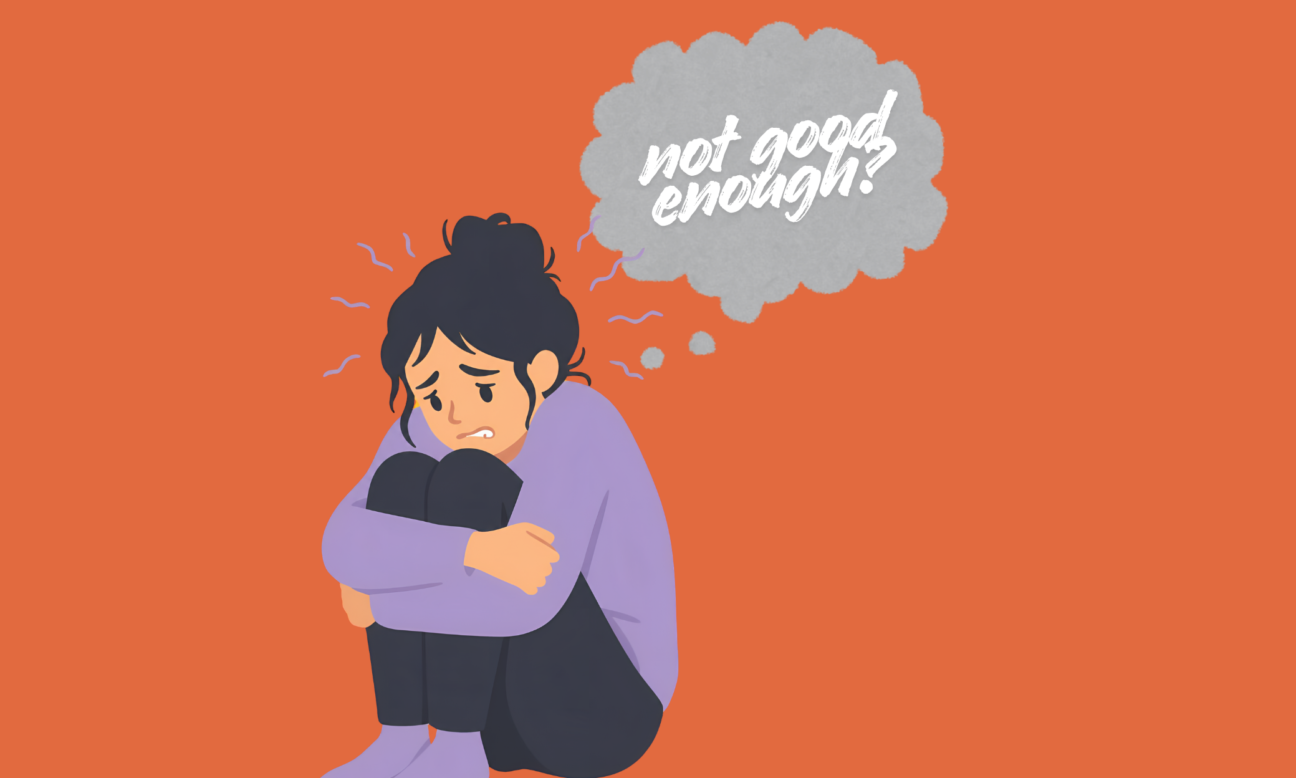
Criticism sometimes felt heavier than it probably should have, and conversations around me occasionally made me question whether I was good enough to be there at all. I wanted to prove that I deserved my place, so instead of admitting that I was struggling, I became very good at pretending that everything was fine.
I told myself the hard days, the criticism, and the loneliness were temporary, because the goal was bigger than all of it. I was keen to learn as much as possible, become a doctor, save lives, serve people, and make my family proud, and I thought that if I kept my eyes fixed on that goal, everything else would eventually fall into place.
What I did not realize was how much I had begun keeping it all inside.
Gradually, I started withdrawing from people. Some days I would skip one meal and then another because I had lost my appetite, and there were nights when I would cry myself to sleep only to wake up the following morning already dreading the prospect of starting another day. I would spend the day wishing it would end, then wake up and find myself going through exactly the same cycle again.
I did not make many friends during my internship, and looking back, I think part of that was because I had convinced myself that I simply needed to focus on learning, working harder, and becoming better. I kept telling myself that once I got through this stage, things would improve.
Again and again, I repeated the same thought: This situation is temporary.
Eventually, however, my body began telling me something that I had been unwilling to admit to myself.
During my internship journey, I found myself in the emergency department twice, going through blood tests, ECGs, cardiology consultations, and outpatient appointments while still trying to keep up with hospital duties. One test led to another as I tried to understand why I was feeling the way I was feeling, and eventually I was diagnosed with gastro-oesophageal reflux disease, depression, and anxiety.
For a long time, I had believed that what I needed was simply more endurance, more discipline, and perhaps a little more strength, but what I was slowly beginning to understand was not that I needed to carry more—it was that I had already been carrying too much.
Finding Resilience in Balance
At that point in my life, I felt deeply alone, exhausted, and overwhelmed, but one of the most important things I eventually learned was that I had never truly been alone in the first place.
That realization did not suddenly make everything disappear, nor was there one conversation, treatment, or life-changing moment that immediately solved everything, and I would never want to suggest that there is one simple answer to something as complex and personal as burnout or mental health.
What changed for me was much quieter: I began to understand something that I wish I had understood much earlier, which is that being resilient does not mean refusing support.
From Burnout to Balance
A series of Infographics created collaboratively by Angellene and TRC - a simple guide to recognizing burnout and the small steps toward resilience that can create lasting balance.
Access Free Resource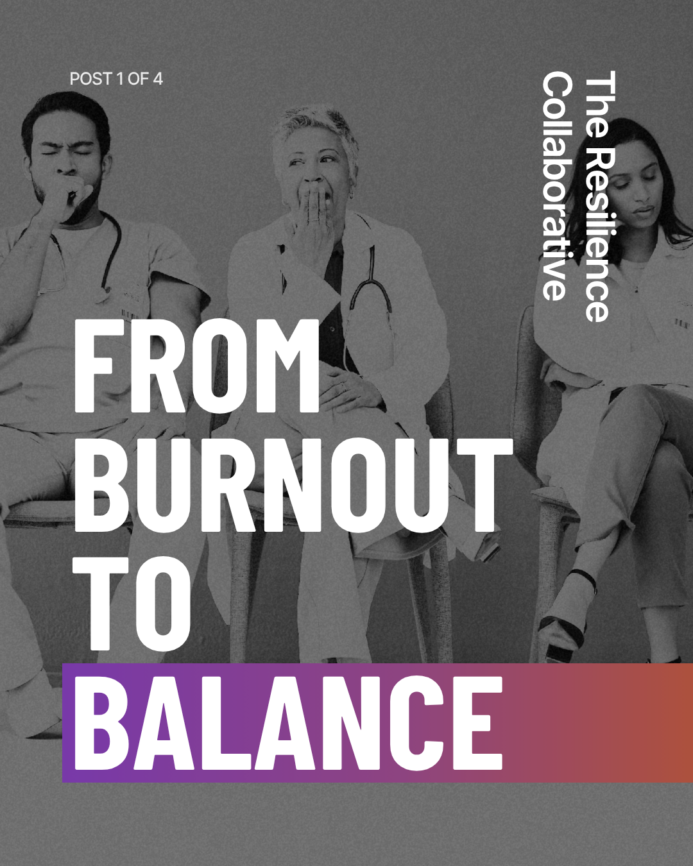
For me, that meant learning to recognize and accept the support that already existed around me. Sometimes support may mean speaking with a healthcare professional, particularly when circumstances have become difficult to manage on your own, but sometimes it can also begin with something much simpler: speaking honestly with a friend, calling a family member, reaching out to a community you trust, or finally allowing yourself to say to another person, “Actually, I am not doing very well.”
There is courage in that admission, although I did not always understand it that way.
I used to think strength meant being able to carry a heavier load, work harder, complain less, push through discomfort, and prove that I could handle whatever was placed in front of me. Resilience, in my mind, meant continuing regardless of how tired I became.
But eventually I had to ask myself a much more uncomfortable question: What happens to the person doing all that carrying?
What happens when we become so focused on caring for patients, families, colleagues, communities, or everyone else around us that we gradually learn to ignore ourselves?
One of the biggest lessons I took from that period was that self-care is not the opposite of service, and caring for yourself does not mean you care any less about others. In many ways, looking after yourself is what allows you to continue showing up meaningfully for others, because none of us can endlessly pour from ourselves without eventually becoming empty.
Today, when I think about burnout, I no longer think only about an individual person feeling exhausted. I think about the expectations we place on ourselves, the cultures we create in our workplaces, the way we respond when somebody tells us that they are struggling, and whether people feel safe enough to ask for help before they reach the point where they can no longer keep going.
I also think much more about community, because wellness cannot always be reduced to a list of things an individual should be doing differently.
We can encourage people to sleep more, exercise, eat properly, meditate, manage their time better, or take breaks, and these things can certainly play an important role in well-being, but we also need to look beyond the individual and ask what kind of environments we are creating around them.
Do people feel supported enough to be honest when they are struggling, or do they feel that asking for help will make them appear weak? Do they have friends, family members, colleagues, or communities who notice when they are slowly withdrawing into themselves? And perhaps most importantly, are our workplaces creating environments where people genuinely feel valued and cared for, or are we simply teaching people how to tolerate more before they finally reach their limit?
Perhaps the journey from burnout to balance begins there—not by trying to become invincible and not by finding increasingly efficient ways to carry the world on our shoulders, but by recognizing that none of us was ever meant to carry everything alone.
I still believe deeply in hard work. I still believe in resilience, service, and showing up for people when they need us, and I do not think those values have changed. What has changed is my understanding of what strength can look like, because strength can also mean recognizing when you need to rest, setting down something you have carried for too long, asking another person for help, and allowing somebody else to care for you when you have spent so much of your life caring for everyone else.
Perhaps one of the bravest things we can do when life becomes difficult is to stop pretending that everything is fine and simply acknowledge that we are human and we need support.
So, if you are someone who spends much of your life showing up for others, I hope you take a moment to ask yourself one question that I wish I had asked myself much earlier: Who is showing up for you?
And if the answer feels uncertain, perhaps that is not a sign that you need to become stronger. It is simply an invitation to reach out, reconnect, and allow yourself to receive some of the same care that you so willingly give to others.
Because caring for yourself does not make you less committed to caring for others. Sometimes, it is precisely this that allows you to keep going.
If this story feels familiar, the TRC community offers another space to connect, be heard, and explore support: The Resilience Collaborative | Join us
About the Author
Angellene is a medical graduate and public health professional currently working across research and university-based roles in Sydney. Her interests include health equity, mental health and wellbeing, environmental health, and community-centered approaches to public health. Drawing from her clinical training and research experience, she is particularly interested in how lived experience can inform more compassionate, supportive, and people-centered systems of care.


Subscribe to the TRC
E-newsletters
Subscribe to The Resilience Collaborative newsletter for timely updates, valuable resources, and insightful content specifically tailored to support the resilience of healthcare workers